

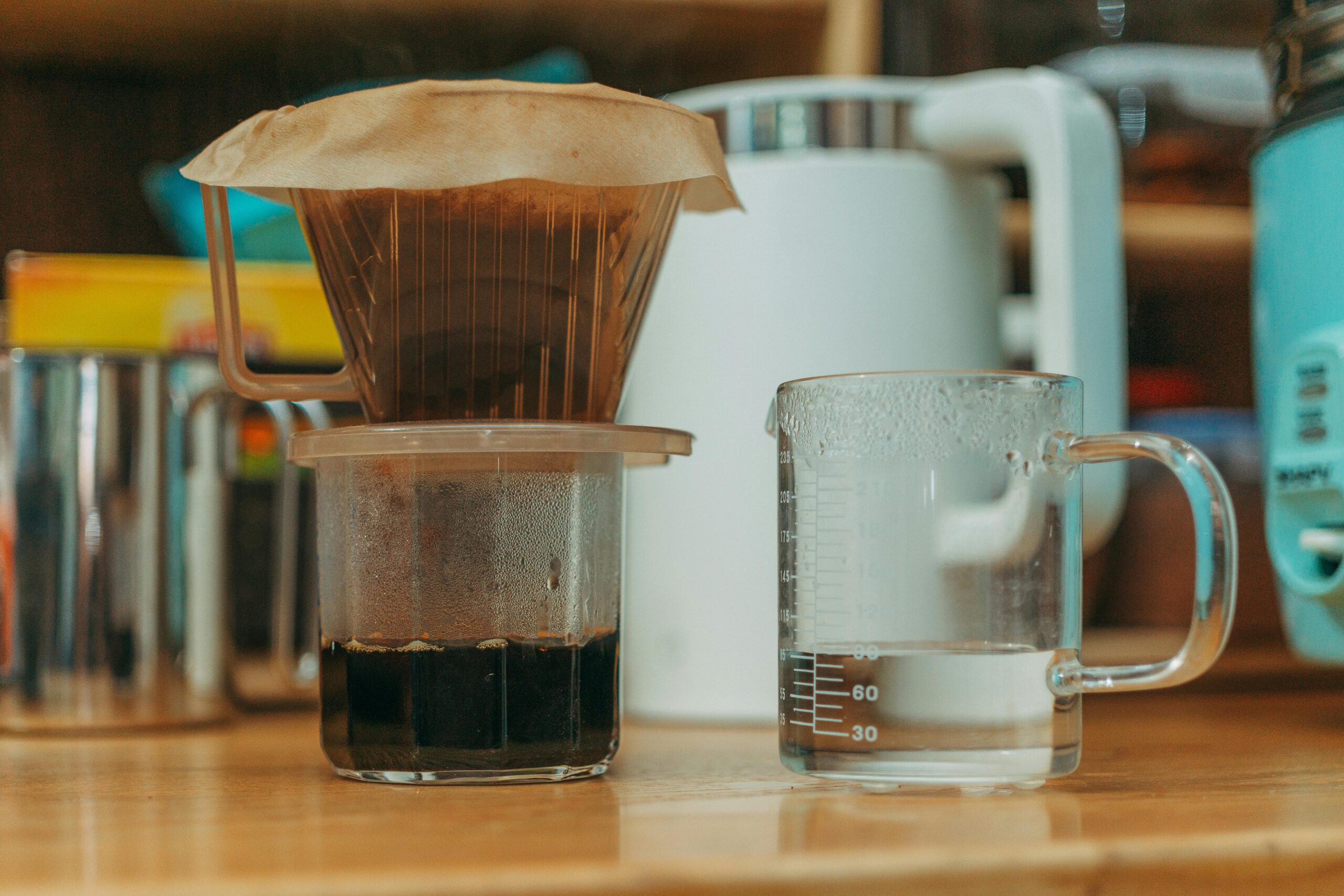
The quality of your water matters for your coffee. On its face, this statement sounds a little silly. Of course water matters. If anything it may sound a little pretentious. Water can’t possibly have that deep of a rabbit hole like the rest of the coffee world, right? Well, sort of. It’s true that water is water wherever and however you’re getting it. But water quality is not the same from one source to the next. And the quality of that water plays a huge role in the quality of your coffee.
Before we continue, it’s important to know that that rabbit hole for water for your coffee can, in fact, go pretty far. We believe, however, that it is possible to use good water without becoming an amateur chemist. A lot of guides on water for coffee recommend manipulating the chemistry of your water without, essentially, lab equipment. You do not need a TDS (total dissolved solids) measurer, for example to get good water. We will cover the basics of water chemistry, the effect that water chemistry has on coffee, and what sort of things you can do, without fuss, to ensure your water quality stays high.
Coffee is Mostly Water
Let’s begin with the following observation: coffee is mostly water. In fact, water makes up about 98-99% of the contents of a cup of coffee. Of course, the beans you’re using, how they were roasted, and how they were ground matter a lot for your coffee. But considering just how much of your finished cup consists of water, it stands to reason that the quality of that water matters a whole lot.
Do: Filter Your Tap Water If You Need To
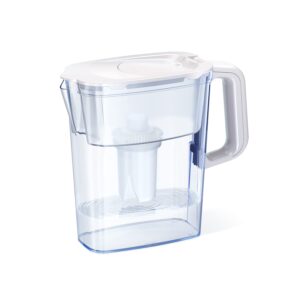
Depending on where you live, the water from your tap may have mineral counts that negatively alter the taste of the water. The writer of this article lives in Chicago where the tap water tends to taste pretty metallic. A standard filter like a Britta will remove any chlorine or unwanted odors. If you have a bad-tasting and bad-smelling tap and you do nothing to change it, then those undesirable qualities will show up in your cup of coffee. If you need to (and you may not!) use a common carbon-filter on your water.
Do: Use a Balance of Minerals
Water from the tap contains a great deal of minerals. Some of these minerals, like magnesium and calcium, you want to keep! These minerals aid in the extraction of flavor from coffee grounds. However, too much mineral content, in other words water that’s too hard, and you will get a bitter, unpleasant, and not terribly flavorful cup of coffee. Too little mineral content and you will end up with an overly acidic, sour coffee.
The key is using water with the right balance of minerals. You want water that’s clean and fresh, free from odors, and has no chlorine whatsoever. It should have a neutral or almost neutral pH, and should, ideally, have the just enough calcium and magnesium, but not too much.
However, there are a lot of characteristics of water that can be difficult to measure without additional equipment in the home. We believe that this level of control for your water is not necessary for great coffee, though it may be rewarding for some. Using clean, fresh, chlorine-free water gets you most of the way there. The rest of our advice hopefully will steer you even further into the direction of excellent water.
Maybe: Use Recipe Water
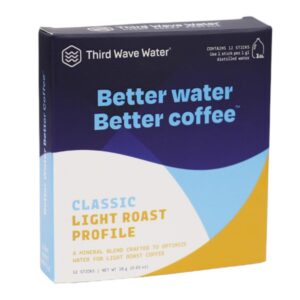
One of the options for getting good water is using recipe water. You can do this at home, as many have tried, or you can purchase one of a number of retail options, such as Third Wave Water. It is possible, if you so desire, to achieve a desirable balance of minerals and alkalinity by using Epsom salts and baking soda to re-mineralize soft water. This requires the use of scales and measurements to achieve the right balance. One example of a home water recipe can be found in James Hoffman’s How to Make the Best Coffee at Home (p. 47-48).
Don’t: Use Distilled or Mineral Water
As we outlined above, water that is too hard or too soft will create unpleasant tastes in your coffee. Distilled water, which is considered soft since so many minerals are removed, is a poor choice with which to brew coffee. Similarly, mineral water, which is considered hard and has high mineral content, is also a poor choice. We recommend you avoid using either of these types of prepared water. A balanced cup of coffee requires balanced water. Distilled and mineral water are simply not balanced well for flavor extraction.
The only exception here is if you intend to use distilled water as a base point to re-mineralize it, like we mentioned before. But distilled water alone is not desirable.
Don’t: Use Bottled Water
If all this so far sounds like it’s too much hassle, the idea of using bottled, purified water to brew coffee with may sound appealing. But the reason we don’t recommend this is simple. It’s wasteful. You simply do not need to purchase plastic bottled water to brew good coffee. Though it may be a shortcut, there are other far less wasteful options available. Before your resort to defaulting to bottled water, we think you should try filters and other solutions first.

Don’t: Overthink It
I know. I’ve just spent this article telling you how to fine-tune the quality of your water, and now I’m saying not to overthink it. But I mean it! Like with any other facet of brewing coffee at home, there comes a point when extra effort (and money) amounts to diminishing returns. You can keep chasing the perfect water chemistry as far as you want, and many have! But the essentials of good water are not far out of reach. If you take nothing else from this article, remember to use water that is clean, fresh, free of chlorine, and has balanced mineral content. Follow these guidelines, and excellent water is yours to use. Happy brewing!